Diamonds
Lab-Grown Diamonds, Explained
Same sparkle, same hardness, a gentler footprint. What to know before you choose a lab-grown stone.
Lab-grown diamonds have changed what is possible in iced-out jewelry. Pieces that once required a serious budget, like a fully set tennis chain or a pavé pendant, are now within reach without trading down on sparkle. If you are deciding between lab-grown and natural, here is what actually matters.
Are Lab-Grown Diamonds Real?
Yes. A lab-grown diamond is pure carbon arranged in the same crystal structure as a diamond from the earth. It has the same hardness of 10 on the Mohs scale, the same way of bending and returning light, and the same durability for everyday wear. It is not a coating, a simulant or a lookalike. Even trained jewelers need specialized equipment to tell the two apart.
How They Are Made
Natural diamonds formed under intense heat and pressure deep underground over billions of years. Laboratories recreate those conditions in one of two ways:
- HPHT (high pressure, high temperature): a small diamond seed is placed in carbon and exposed to the extreme pressure and heat found in the earth’s mantle.
- CVD (chemical vapor deposition): a diamond seed sits in a chamber filled with carbon-rich gas, and carbon atoms build up on it layer by layer.
Either method can produce a top-quality stone. After growing, each diamond is cut and polished by hand exactly like a mined diamond.
Lab-Grown vs. Natural
The biggest difference is price. Lab-grown diamonds typically cost far less than natural diamonds of the same size and quality, which means more carat weight, a higher color grade or a fuller setting for the same spend. Natural diamonds are rarer and tend to be chosen for their geological origin and their long-standing role as heirlooms.
Neither choice is wrong. If the meaning of a stone formed in the earth matters to you, choose natural. If you want maximum ice for your budget, lab-grown is hard to beat. Every Website-16 product page states clearly which type of diamond is set in the piece.
Where Moissanite Fits In
Moissanite is often mentioned in the same conversation, but it is a different gemstone made of silicon carbide. It is very hard and throws off more colorful flashes of light than a diamond, at a lower price again. It is a great option for bold, budget-conscious pieces, as long as you know you are buying moissanite rather than diamond.
The 4Cs Still Apply
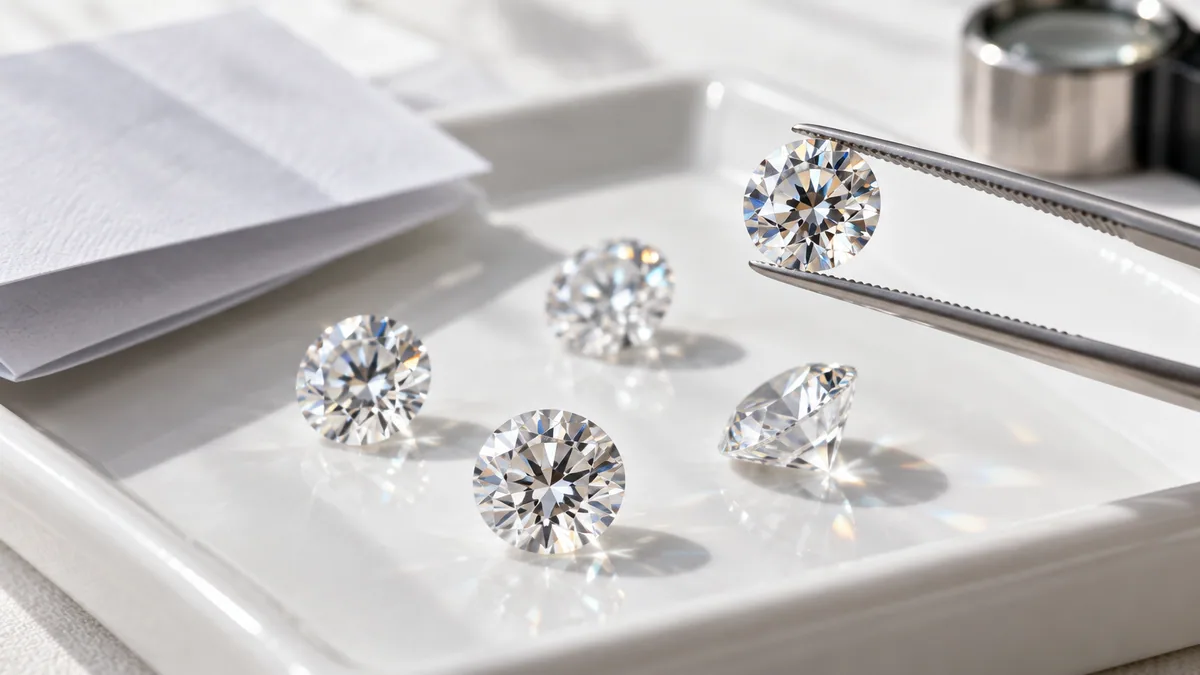
Lab-grown diamonds are graded on the same scale as natural ones: cut, color, clarity and carat. Cut has the greatest effect on sparkle, so prioritize it. For pavé and iced-out settings with many small stones, consistent color across the piece matters more than a perfect clarity grade, because small inclusions are invisible at that size.
A Gentler Footprint
Growing a diamond in a lab avoids large-scale mining, and its origin is fully traceable from the facility to the finished piece. Energy use varies by producer, so look for brands that can tell you where their stones come from. We source our lab-grown diamonds from growers who disclose their production methods.
Choosing Your Stone
Start with how you will wear the piece and what you want to spend, then compare options side by side. Our Diamond & Gemstone Guide breaks down every stone we offer, and our team is happy to walk you through the differences in person or by video.